Showing posts with label Blood sugar. Show all posts

Sunday, October 16, 2011

Blood Sugar Estimation By Laser Beam


The simple thought of finger pricking is frightening for some and when it comes to the diabetics, who need constant blood sugar monitoring at frequent interval is perhaps very scary.

Scientists from University of Toronto are working on beam of near infra-red light to estimate blood sugar without a finger prick or puncturing a vein. The device can be used in hospitals as well as in home.

The chemical bonds in sugar molecules absorbs energy as the beam of light passes through human tissue harmlessly; and this absorption is measured by the device; that can provide information about the concentration of glucose in the blood.
The scientists are stranded in a point to make sure that other things in the blood should not absorb the near-infrared.
The lead scientist Mandelis and his team used mid-infrared light, which is absorbed by glucose and not by other molecules in the blood; but with one major exception; water that makes up most of blood volume and can absorb the light.
They used 2 beams that are tuned to slightly different wavelengths:
One is absorbed by both water and glucose, the other by only water. When both beams strike dissolved glucose in concert, the water absorptions cancel each other out, giving off measurable heat that spotlights just the sugar.
So far, it’s proven sensitive even to small quantities of glucose. And the team is working with a Toronto hospital to set up tests with people.
Published in smartplanet
Enhanced by Zemanta

Saturday, February 19, 2011

Too Tight Blood Sugar Control in Hospital may be Harmful

A patient having his blood pressure taken by a...Image via WikipediaToo tight blood sugar control in hospitalized diabetic patients may not be required. It has been seen that blood sugar level within 180 to 200 milligrams% does not particularly affect the outcome of the patient.
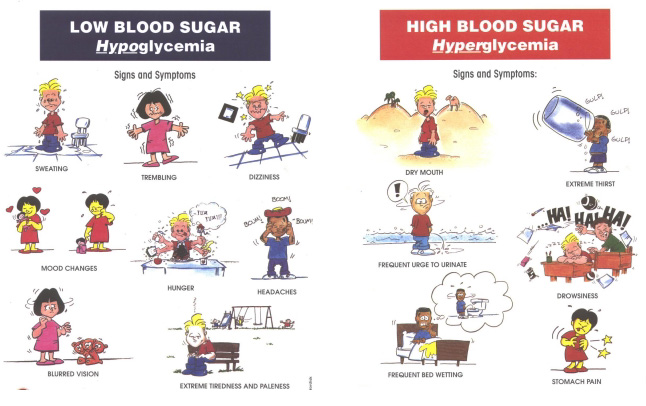
Medical and surgical patients in the hospital are sometimes prone to hypoglycaemia mainly due to inadequate food intake following surgical procedures.
It should not be interpreted that glucose control isn't important for critically ill patients; It is. And it's important not to let the blood sugar get too high because of the risk of complications, like a higher risk of infection and fluid and electrolyte abnormalities
This is according to American College of Physicians, recommending that doctors not attempt intensive insulin therapy designed to achieve normal blood sugar levels in patients in medical or surgical intensive care units.
These guidelines are for both people with diabetes and without the condition. The college recommends that doctors should maintain blood sugar levels between 140 and 200 milligrams per deciliter (mg/dL) for anyone in medical or surgical intensive care.
These recommendations are similar to the guidelines from the American Diabetes Association (ADA) and the American Association of Clinical Endocrinologists (AACE). However, those guidelines recommend that blood sugar levels should be kept below 180 mg/dL to reduce the risk of infection and other complications.
For reference, in a healthy person with type 2 diabetes, normal blood sugar levels would be between 70 mg/dL and 130 mg/dL before eating. And, even after eating (postprandial), the recommendation from the ADA is to keep blood sugar levels under 180 mg/dL.
Adopting this practice may reduce many hypoglycemic events in the hospital with intense insulin therapy.
Enhanced by Zemanta

Thursday, July 2, 2009

MONITORING DIABETES MELLITUS.

Monitoring the status of diabetes is most important.Many of my patients when asked about the recent value of their blood glucose would give a strange reply.That is I am taking medicines and my ulcer is healing nicely and I do not feel anything bad.These are good personal assessment nevertheless one should go for  regular check up of blood glucose at least in an interval of six months after stabilization .Sometimes blood glucose remains above the strict control level and below the overt level and may not give much of symptoms. And silently eat into the system.
   Monitoring the Glycosilated haemoglobin level once in six months will give a correct idea about the blood glucose level in the last three months. The idea is that when blood glucose level memains constantly above the normal value it gets attached to the haemoglobin inside the red blood cells and that is reflected in the estimation.In addition to it glucometer of good brand can be used to self monitor the glucose level which gives a near normal value .If somthig is suspected from it the glucose level should be confirmed in a good laboratory.
In addition to it estimation of fat component in the blood is also important as this is the friend of high blood glucose level .Together they work out to give the patient a heart attack.

Monitoring of glycosilated haemoglobin level ,blood glucose level in a glucometer and estimation of blood lipids will go hand in hand with a good control of diabetes mellitus.
We call it diabetes mellitus because there is something called diabetes insipidus and renal  diabetes(glycosuria).We will see them later. 
Enhanced by Zemanta

Featured Post

Cyclodextrin for Treatment of Atherosclerosis

Cardiovascular disease from atherosclerosis is one of the most common causes of death worldwide. Inflammation plays a crucial role in ...