Showing posts with label Mammography. Show all posts

Monday, November 15, 2010

Mammoghaphy for Breast Abscess

Breast absecss,Mammoghaphy

Breast abscess causes so much of pain that patients seeks treatment quickly. It also causes fever. But sometimes, particularly in India they come late to the appropriate doctor, getting treatment elsewhere.
Often they come with reports of fine needle aspiration as well as mammogram; though surgeons do not routinely recommend mammography in these cases. Aspiration is all that required to establish the diagnosis of breast abscess.
However, in some cases it is advised; and the image is a mammography of a case of breast abscess.
The most opaque or whitish part seen in the mammography image (In the upper part) is the abscess containing pus, that gives the density to the image. There is no micro calcification or distortion of breast tissue; suggestive cancer breast.
It is sometimes required to differentiate from cancer of breast, particularly in a little late cases, where the acute symptoms of breast abscess have subsided. In those cases the lesion feels like a hard and irregular mass.
Drainage is the treatment, repeated removal of the contents may be tried.
Enhanced by Zemanta

Thursday, May 27, 2010

Molecular Breast Imaging

Molecular Breast Imaging

I quote the summary from Mayo Clinic;

"Recent recommendations against routine mammograms for women in their 40s have prompted heated debate about the cost-effectiveness of annual breast screenings for that group. The thousands of breast cancer diagnoses each year in women aged 40 to 49 would seem to justify annual mammograms. But mammography’s ability to detect tumors in younger, dense breast tissue is limited. Mayo Clinic researchers have developed a new tool that can solve this dilemma. Molecular breast imaging (MBI) is three times more effective than mammograms, but far less costly than other nuclear-medicine imaging. Available to patients soon, MBI has the potential to revolutionize breast imaging."


Molecular breast imaging (MBI), when available will be able to detect more number of small breast cancers, resulting more assured removal of cancer tissue.
Reblog this post [with Zemanta]

Monday, February 15, 2010

Giant Fibroadenoma of Breast may Require Mastectomy

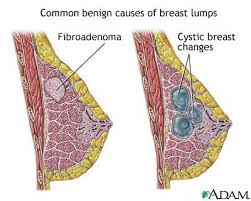
Fibroadenoma is a benign breast disease due to aberrations in normal development and involution (ANDI). This is a disease mostly seen in the time of breast development and involution. It is called as “breast mouse” because of the looseness in movement of the firm to hard tumor tissue inside the normal breast tissue. It can be of different size and shape; usually globular and less than 5cms in diameter when reported first. It may sometimes become large enough to occupy the whole breast. It is very rarely turns malignant. But when acquires a large size to be called as giant fibroadenoma may have associated features of malignancy; and that is the reason why, it should be subjected to histopathological study after removal. Giant fibroadenaomas should be subjected to fine needle aspiration cytology (FNAC), mammography and if required, other investigations like ultrasonogram to rule out malignancy before surgery. Removal of giant fibroadenomas may require removal of a large chunk of normal breast tissue and sometimes removal of the whole breast.    
Reblog this post [with Zemanta]

Featured Post

Cyclodextrin for Treatment of Atherosclerosis

Cardiovascular disease from atherosclerosis is one of the most common causes of death worldwide. Inflammation plays a crucial role in ...